
![[Z Supply] Worth Every Second Thermal Top](http://landrykate.com/cdn/shop/files/EBD39252-CDF0-4FA3-A4CD-4830D52055A9.jpg?crop=center&height=280&v=1790864744&width=240)


Table of Contents
- Why a Neutral Wardrobe Is Worth the Switch
- Start With a Neutral Color Palette for Clothing
- The Capsule Wardrobe Essentials for Women 2026
- How to Style Neutral Outfits Without Getting Bored
- Build Your Neutral Wardrobe on a Budget
- Common Mistakes to Avoid When Going Neutral
- Your Neutral Wardrobe Checklist
- Frequently Asked Questions
Last Updated: September 5, 2026
Why a Neutral Wardrobe Is Worth the Switch
The average woman wears only 20% of her closet regularly. A neutral wardrobe flips that ratio by centering purchases around timeless basics that coordinate effortlessly, making getting dressed a simple, repeatable process.
At Landry Kate, the goal isn't to own fewer clothes; it's to own clothes that actually work together. A neutral wardrobe is a collection of garments in shades like ivory, oatmeal, heather gray, and camel that mix and match to create dozens of outfits from a small number of pieces.
This guide walks you through building that system: choosing a flattering palette, sourcing essentials, styling without boredom, and doing it on a budget.
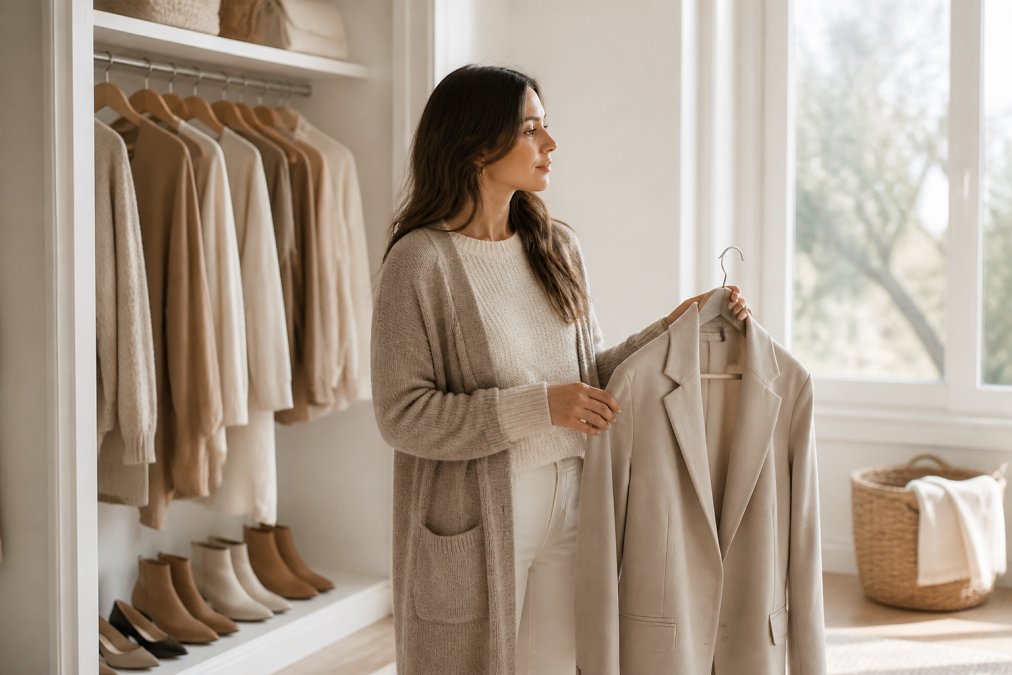
Start With a Neutral Color Palette for Clothing
A neutral color palette is the foundation of any versatile wardrobe. Unlike trend-driven colors, neutrals like cream, taupe, charcoal, and soft brown remain timeless, making them worth the investment.
Choose a palette with range. A purely black-and-white wardrobe feels stark; warm ivories, cool grays, and mid-tone tans give you more room to play. Think of your palette as building blocks: light shades for tops, dark for bottoms, mid-tones for layering.
How to Match Neutrals to Your Undertones
Your skin's undertone determines which neutrals make you glow versus which ones wash you out. A simple check: look at the veins on your wrist in natural light. Blue or purple veins suggest cool undertones, green veins point to warm undertones, and a mix means you're neutral.
Cool undertones pair best with gray, charcoal, and crisp white. Warm undertones shine in camel, cream, and olive-toned browns. If you're neutral, you can wear nearly everything, which gives you the most flexibility when shopping for capsule wardrobe guidance from fashion stylists.
The Science of Warm vs. Cool Neutrals
Every neutral has an underlying temperature. A gray can be blue-based (cool) or yellow-based (warm); a beige can lean pink (cool) or golden (warm). A neutral that clashes with your undertone creates a muddy effect; one that aligns makes your skin look clearer.
Here's a practical breakdown:
- Cool-leaning neutrals: True gray, charcoal, heather gray with blue undertones, stark white, navy, and taupe with a pink cast. These pair best with silver jewelry and cool-toned makeup.
- Warm-leaning neutrals: Camel, cream, ivory, oatmeal, olive-brown, tan, and gray with a yellow or green cast. These pair best with gold jewelry and warm-toned makeup.
- True neutrals: Black, true white, and mid-tone gray without a visible cast. These work on almost everyone and are safe bets for foundational pieces like trousers or outerwear.
Building a Palette With Intention
Once you know your undertone, build a palette of five to seven neutrals that includes at least one light, one dark, and one mid-tone option. For a warm undertone, that might look like: ivory (light), camel (mid), and espresso brown (dark). For a cool undertone: crisp white (light), heather gray (mid), and charcoal (dark). This structure ensures you always have contrast available for outfit-building.
Avoid mixing warm and cool neutrals indiscriminately, an ivory top with stark white pants looks unintentional. Mix deliberately: a warm camel coat over a cool gray sweater creates sophisticated tension; a warm ivory blouse with warm tan trousers creates a seamless line.
The 80/20 Neutral Rule
The 80/20 rule: 80% of your wardrobe in core neutrals, 20% in secondary neutrals or near-neutrals like olive, rust, or dusty blue. This adds variety without breaking cohesion and prevents owning ten identical ivory tops.
A well-chosen palette makes every future shopping decision easier, when you know your exact shades, you can immediately filter out what doesn doesn't belong.
The Capsule Wardrobe Essentials for Women 2026
The capsule wardrobe essentials for women 2026 center on quality over quantity. Stylists recommend starting with roughly 30 coordinating pieces; a few core items do the heavy lifting.
A well-edited neutral capsule includes: two or three knit tops, one pair of well-fitting trousers, a versatile cardigan, classic denim, and a simple dress. Each piece should pair with at least three others; if it only works with one outfit, it doesn't belong.
For transitional weather, a relaxed cardigan is arguably the most valuable piece you can own. The Keep It Fresh Cardigan in Ivory layers effortlessly over tees in spring and under coats in winter, making it a true four-season staple. Similarly, the Cool Mornings Pants offer a relaxed wide-leg silhouette that reads polished enough for the office yet comfortable enough for weekend errands.


How to Style Neutral Outfits Without Getting Bored
Styling neutral outfits comes down to contrast. When everything is the same shade, the eye has nothing to grab onto. Mixing light with dark, or soft with structured, creates visual interest without adding bright color.
A monochromatic outfit, oatmeal top, cream trousers, tan cardigan, stays cohesive while feeling intentional. Add one contrasting element, like a darker bag or belt, to anchor it.
Layering Textures and Silhouettes
Texture does the work color usually does. A chunky cable-knit over a silk blouse adds depth; wide-leg pants with a fitted top create balance. With a limited palette, fabric variation is your primary styling tool.
The Z Supply Keep Steady Cardigan in heather gray exemplifies this principle. Its soft knit adds visual texture to any outfit, while the classic button-front design keeps the silhouette clean. Layer it over a simple tee for a casual look, or button it fully over trousers for a more polished ensemble.
Build Your Neutral Wardrobe on a Budget
Building this wardrobe doesn't require a designer budget. Invest in a few high-quality staples and keep the rest affordable. Fabric quality and fit matter more than brand names, since well-made neutrals in classic cuts stay relevant for years.
Start with bottoms and outerwear, they see the most use and are worth spending on. Save on trendier items. Allocate roughly 60% of your budget to core staples and 40% to supporting pieces.
Shopping smaller boutiques often yields better value than big-box retailers because the curation is done for you. At Landry Kate, our Campfire Nights Top in Oatmeal delivers that elevated everyday feel at a price point that won't derail your budget. The soft knit and relaxed silhouette transition easily from work to weekend without looking like you tried too hard.

Common Mistakes to Avoid When Going Neutral
The most frequent mistake is buying too many similar items. Three ivory tops with the same cut and fabric function as one piece. Instead, buy one ivory knit, one cream blouse, and one white tee, each serves a different purpose.
Another pitfall is ignoring garment care. Neutrals show wear faster than darker colors, so proper maintenance extends their life significantly. Always check care labels before purchasing. Many modern knits are machine-washable, but some require gentle cycles or laying flat to dry. The Federal Trade Commission's guide to clothing care labels explains what those symbols actually mean, saving you from accidentally shrinking your favorite sweater.
Neglecting your body type is a third common error. A neutral palette doesn't mean a one-size-fits-all silhouette. Find neutral pieces that fit your specific shape rather than forcing trends that don't serve you.
The Maintenance Gap: Keeping Whites and Beiges Alive
Beige, ivory, and white are the hardest colors to keep fresh, they show every stain and yellowing. Without a care strategy, your "investment pieces" will look tired within six months. The fix is a proactive maintenance routine.
Stain removal for light fabrics: Act fast, within 30 minutes if possible. Blot (don't rub) the stain with a clean cloth. For protein-based stains like coffee or sweat, use a small amount of dish soap mixed with cold water. For oil-based stains, apply a dab of gentle laundry detergent directly to the spot and let it sit for 10 minutes before washing. Avoid hot water on any fresh stain, heat sets the stain permanently.
Preventing yellowing in whites and ivories: Yellowing typically comes from body oils, deodorant residue, and hard water minerals. Wash white and ivory garments separately from darker colors, and use a laundry additive like oxygen-based bleach (e.g., OxiClean) once a month. Avoid chlorine bleach on ivory or cream fabrics, it strips the warm tone and leaves an unnatural stark white. For underarm yellowing, pre-treat with a paste of baking soda and water before washing.
Drying and storage: Heat is the enemy of neutral fabrics. High-heat dryer cycles cause shrinkage and can set stains. Air-dry delicate knits flat on a towel to preserve their shape. For storage, avoid wire hangers that create shoulder bumps. Use padded hangers for knits and fold heavy sweaters to prevent stretching. Store seasonal whites in breathable cotton garment bags, plastic traps moisture and encourages yellowing.
The Body Type Blind Spot
Silhouette matters as much as color. The right neutral pieces should flatter your specific frame, not just match your palette. Here's how to adapt the standard capsule to common body types:
- Pear shape (narrower shoulders, wider hips): Choose darker neutrals on the bottom (charcoal, espresso) and lighter neutrals on top (ivory, cream) to balance proportions. Wide-leg trousers in a dark neutral elongate the leg. Avoid cropped jackets that cut at the widest point of the hip.
- Hourglass (balanced shoulders and hips, defined waist): Look for pieces that acknowledge your waist. Wrap tops, belted cardigans, and high-rise trousers with a tapered leg work well. Avoid boxy, shapeless silhouettes that hide your proportions, a neutral palette doesn't require sacrificing fit.
- Athletic or rectangle (straight up and down): Create curves with texture and layering. A chunky cable-knit cardigan adds volume to the upper body. Trousers with a slight flare or pleat add shape below. Avoid monochromatic outfits in the same fabric weight, they can read as flat.
- Apple shape (fuller midsection, slimmer legs): Choose tops that skim rather than cling, and pair them with darker bottoms. V-necklines in ivory or cream draw the eye upward. Straight-leg or bootcut trousers in a dark neutral balance the silhouette.
The 30-Day Wear Test
The 30-day rule: when you buy a new neutral piece, wear it within 30 days in at least three different outfits. If you can't make it work, return or donate it. This prevents the accumulation of "almost right" pieces.
Your Neutral Wardrobe Checklist
Use this checklist to evaluate every potential purchase before it enters your closet:
- Does it match at least three existing pieces?
- Does the color flatter your undertone?
- Is the fabric quality high enough to survive regular wear?
- Can you machine wash it or manage the care requirements?
- Does the fit work for your body type without alterations?
If you answer no to more than one question, it's probably not a worthwhile addition. This filter prevents impulse buys and keeps your wardrobe cohesive over time.
| Wardrobe Component | Ideal Quantity | Primary Role |
|---|---|---|
| Knit tops (ivory, oatmeal) | 3-4 | Everyday layering base |
| Cardigans (gray, cream) | 2-3 | Transitional outer layer |
| Trousers (wide-leg, tailored) | 2-3 | Work and dressy looks |
| Denim (classic wash) | 1-2 | Casual foundation |
| Simple dress | 1-2 | One-piece outfits |
The sustainable fashion movement has also embraced this approach. Building a smaller, more intentional wardrobe reduces consumption and waste, aligning with the Environmental Protection Agency's textile recycling guidance. When every piece earns its place, you shop less and wear more.
Frequently Asked Questions
What is the 70/30 wardrobe rule?
The 70/30 rule suggests that 70 percent of your closet should be versatile, timeless basics and 30 percent can be trend-driven or statement pieces. For a neutral wardrobe, this means the majority of your pieces fall within your neutral color palette, making them easy to mix and match. The remaining 30 percent gives you room to experiment with color or prints without disrupting the cohesive feel of your closet.
How do you mix and match neutral tones effectively?
Mix neutrals by pairing different shades within the same color family, like oatmeal with cream or heather gray with white. Pay attention to undertones. Warm neutrals like beige and tan pair well together, while cool grays and whites work as a separate group. Add texture to create visual interest. A chunky knit paired with smooth trousers prevents an outfit from looking flat or one-dimensional.
How can I make a neutral wardrobe look interesting and not boring?
Texture is your best tool. Combine a ribbed knit top with wide-leg pants, or layer a soft cardigan over a smooth cotton tee. Play with silhouettes by mixing relaxed pieces with tailored ones, such as a fitted top with flowy trousers. Add gold or silver jewelry, a structured bag, or a belt to create focal points without introducing color that breaks your palette.
How do I transition my neutral wardrobe between seasons?
Focus on layering. A short-sleeve knit like the Campfire Nights Top works in fall under a cardigan and in spring on its own. Swap lightweight cardigans for heavier knits as temperatures drop, and switch trousers for denim or add tights underneath. Choose multi-seasonal fabrics like soft cotton knits that breathe in warmer months and layer well when it gets cold.
What are the essential pieces for a neutral capsule wardrobe?
Start with a few core pieces that form the foundation of your neutral color palette: a classic button-front cardigan, a soft short-sleeve knit top, a pair of relaxed wide-leg pants, and a well-fitted pair of jeans. These items mix and match to create multiple outfits. Add a white tee, a blazer, and a simple dress to expand your options without adding clutter.
Building a neutral wardrobe is about making smarter choices, not more expensive ones. You need pieces that coordinate, fabrics that last, and styles that flatter your specific body and coloring. Landry Kate curates exactly that: versatile neutral staples with new arrivals weekly, so you can refresh your capsule without starting over. Sign up for 20% off your first purchase and start building a closet that actually works for you.